A smokeless fire pit is exactly what it sounds like: a wood-burning fire pit engineered to dramatically reduce the smoke that drifts into your face and your guests’ eyes. It does this through a double-wall design — essentially a fire pit built inside another fire pit — that preheats air and injects it at the top of the burn chamber, causing a secondary combustion of gases that would otherwise escape as smoke. The result is a hotter, cleaner-burning fire that lets you actually sit around it instead of constantly rotating chairs. If you’re planning a patio, backyard entertaining space, or outdoor living area and you’ve spent real money on hardscape, furniture, or a pergola, this category deserves a serious look. This article breaks down the two dominant brands — Solo Stove and Breeo — against a handful of credible challengers, with honest math on price, longevity, and which one fits which kind of host.
| EDITOR'S PICKCuisinart 24” Cleanburn Smokele… | Mid-tier[TIKI Patio Smokeless Outdoor Fi](https://www.amazon.com/dp/B082XHVGZM?tag=greenflower20-20)… | Budget pick[Solo Stove Yukon 27 Inch Smokel](https://www.amazon.com/dp/B0B79ZH4JD?tag=greenflower20-20)… | |
|---|---|---|---|
| Weight | — | — | 38 lbs |
| Material | Stainless Steel | — | Stainless Steel |
| Cover Included | — | ✓ | — |
| Diameter | 24" | 25" | 27" |
| Price | $399.99 | $276.48 | |
| See on Amazon → | See on Amazon → | See on Amazon → |
How the Double-Wall System Actually Works — and Where It Can Let You Down
Before picking a brand, it helps to understand where the engineering differences live, because they directly predict which failure modes you’ll see in year two or three.
The double-wall secondary combustion system depends on two things happening right: (1) the air gap between walls stays hot enough to preheat incoming oxygen, and (2) the top-row air jets remain unobstructed. Both of these are manufacturing and materials problems, not just design problems.
Steel gauge and weld quality determine how many thermal cycles a unit survives before warping. Every fire pit that uses this technology is running metal through repeated 800–1,200°F heat cycles. Thinner steel deforms faster. Solo Stove uses 304 stainless steel across its lineup; Breeo uses a mix of stainless and weathering (corten) steel depending on the model. Corten develops a stable rust patina over 6–18 months that actively resists further corrosion — a meaningful advantage in humid or coastal climates where bare stainless can develop surface oxidation spots over time, though 304 stainless remains a strong performer in most regions.
Ash pan and airflow management are where owners most consistently report differences. A clogged ash pan restricts the intake airflow that feeds the double-wall system, which degrades smokeless performance noticeably. The This Old House Reviews Team, in their “Best Smokeless Fire Pits” guide, notes that models with easy-removal ash pans get maintained more regularly — worth weighting heavily if you’re specifying for clients who won’t obsess over upkeep.
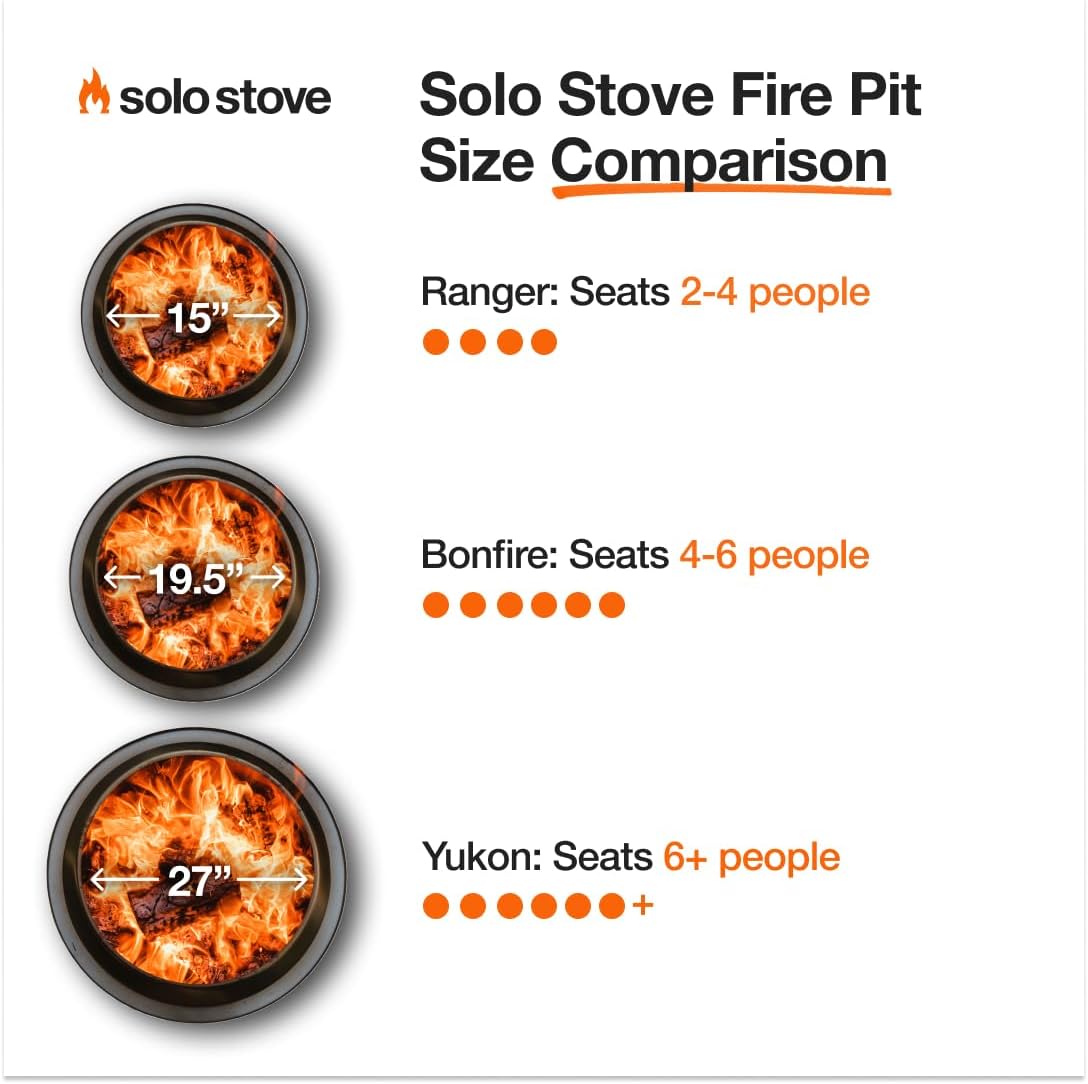
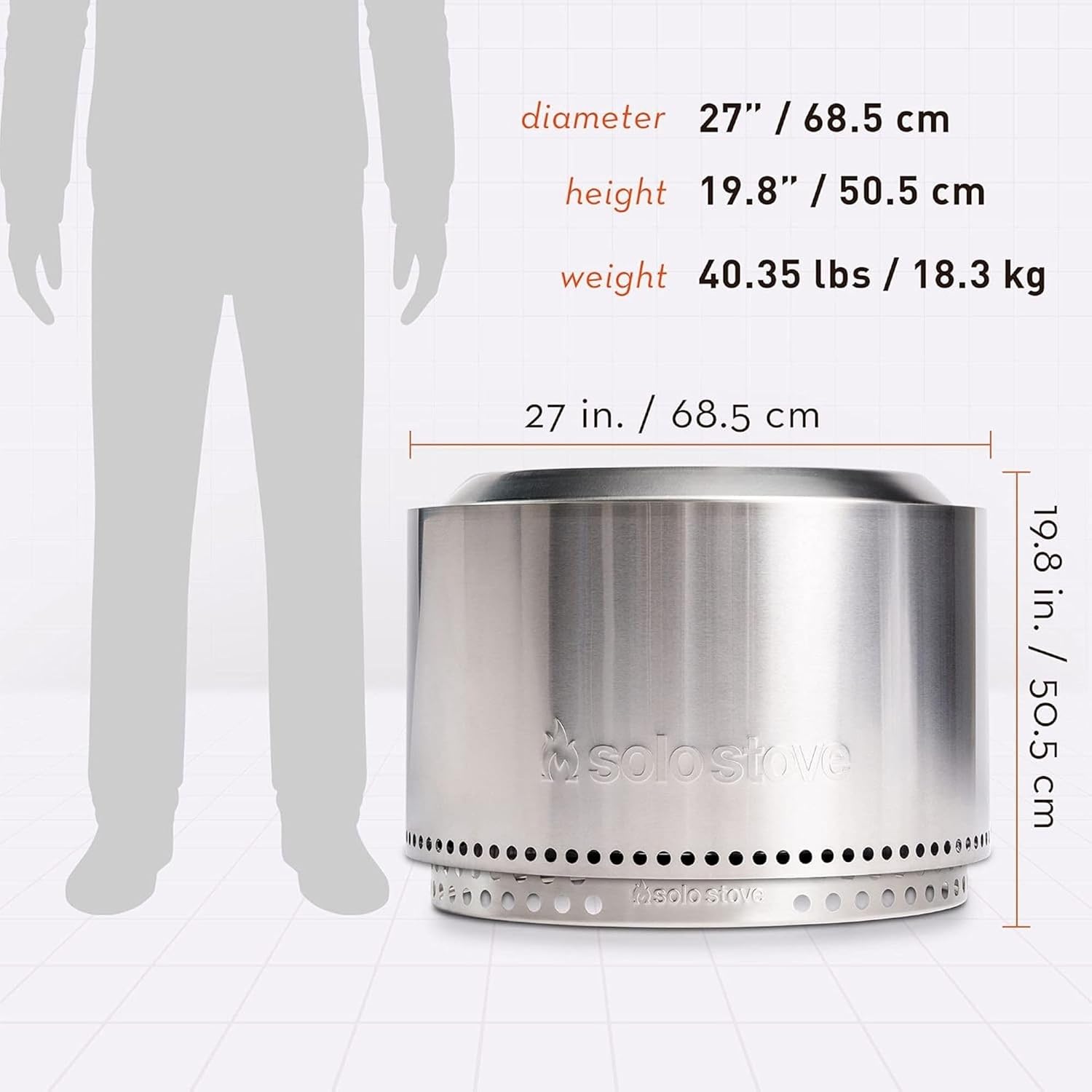
Diameter and BTU output matter more than most buyers realize. A 19-inch unit (Solo Stove Bonfire, Breeo X Series 19) is right-sized for two to four people within 6–8 feet. The 24–27-inch units (Solo Stove Yukon, Breeo X Series 24) are the real patio-anchor pieces — they throw enough radiant heat to warm a six-to-eight person seating circle in 40°F weather and can handle 18-inch split logs.
Solo Stove vs. Breeo vs. the Field: Three Tiers, Three Different Buyers
The smokeless fire pit market has organized itself into a recognizable three-tier structure: a premium design-forward tier, a mid-range performance tier, and a budget-accessible tier. Each has a clear leading candidate — and each makes sense for a different kind of host.
Premium Tier: Breeo X Series 24 and Luxeve
Breeo (X Series 24: approximately $530 retail; Luxeve 24 with corten finish: approximately $650 retail, as of May 2026) is positioned toward the craft and design end of the market. The corten steel models are genuinely striking once the patina develops — they read as intentional and architectural rather than off-the-shelf, and they align well with weathered wood, natural stone, or raw-concrete patio aesthetics. Breeo’s Outpost cooking system — a swing-arm grill that mounts directly to the fire pit — is more robust than Solo Stove’s cooking accessories and is a meaningful differentiator for clients who want the fire pit to double as a live-fire cooking station.
The trade-off: corten patina runoff is real. During the first season, tannin-brown water will bleed off the unit when it rains. On concrete, bluestone, or light-colored pavers, this can stain. Owner experience threads on Hearth.com consistently flag this issue — sealing the hardscape surface underneath the pit before patina development is the practical fix, but it’s a conversation to have before installation, not after.
Outfitted cost reality check: $530 (pit) + $100 (stand) + $50 (cover) + $200 (Outpost grill) + $60 (hardscape pad) = approximately $940 before tax. That is the number to put in a client proposal, not the $530 sticker.
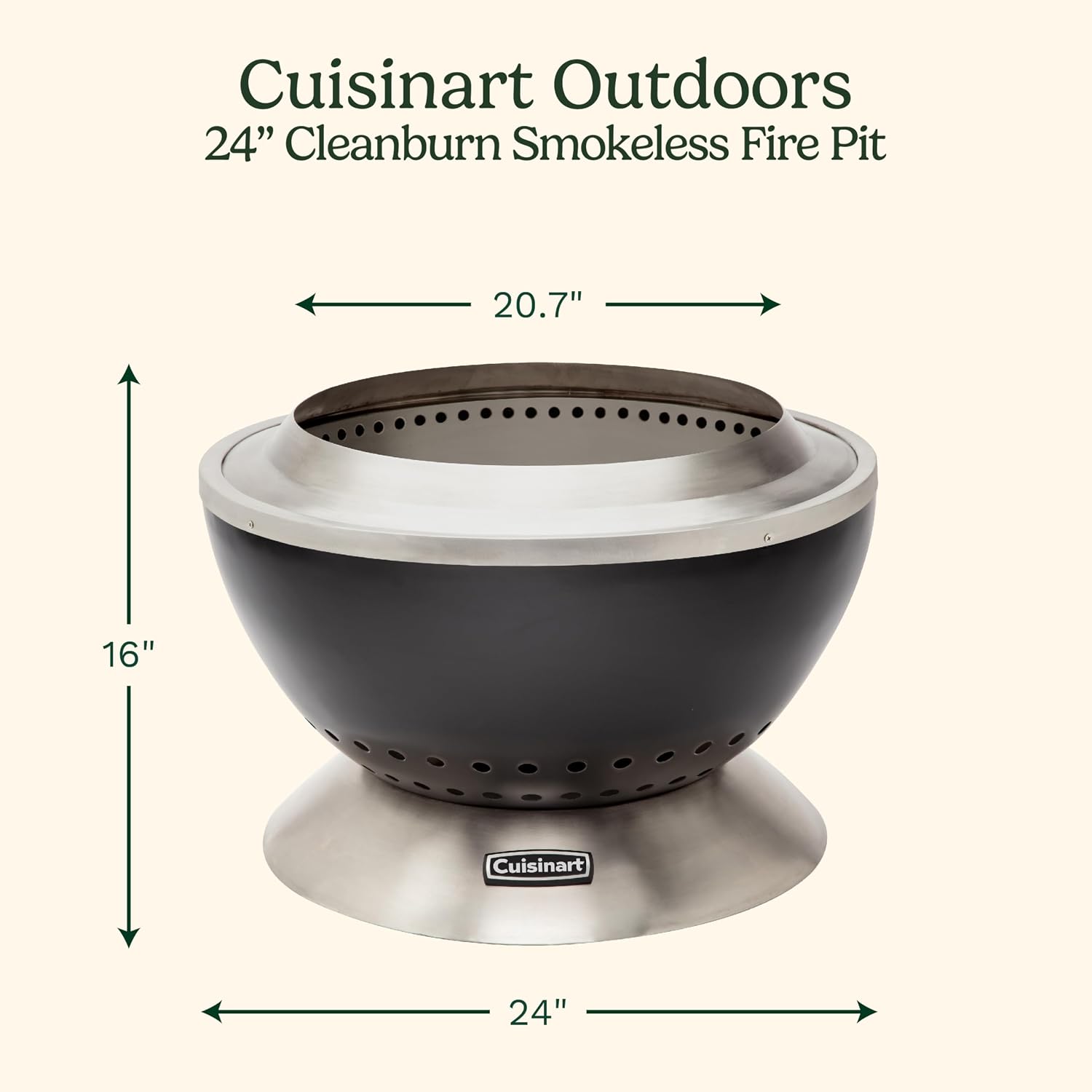
Cuisinart
$399.99
In stock on Amazon
Check price on AmazonMid-Tier: Solo Stove Bonfire 2.0 and Yukon 2.0
Solo Stove (Bonfire 2.0: approximately $350 retail; Yukon 2.0: approximately $550 retail, as of May 2026) has the largest consumer mindshare in the category, the widest accessory ecosystem (stands, lids, shelter covers, cooking grates), and the most aggregated owner review data of any smokeless fire pit brand. The 2.0 redesign added a removable ash pan — a direct response to owner complaints about the original generation. Wirecutter’s “The Best Fire Pits” review, published by the New York Times product review desk and updated in 2025, has consistently recognized Solo Stove as a top performer in the smokeless category for ease of use and quality of burn.
The stainless finish is clean and modern, which pairs well with contemporary patio furniture. The trade-off: stainless Solo Stoves show heat discoloration — bluing and amber tones — after a handful of burns. This is cosmetically normal and structurally harmless, but clients with high-polish aesthetic expectations should be briefed on it upfront. Solo Stove’s cooking accessories (grates in the $60–$80 range) are adequate for casual grilling but do not match Breeo’s Outpost system for live-fire cooking versatility.
The Yukon 2.0 at 27 inches is the right size for a serious patio anchor. The Bonfire 2.0 at 19.5 inches is the entry point with the least financial risk — established warranty support, easy resale value, and the 2.0 ash pan redesign addressed the main complaint from the first generation.
TIKI
$276.48
In stock on Amazon
Check price on AmazonBudget Tier: BioLite FirePit+, Tiki Brand, and What to Avoid
BioLite FirePit+ (approximately $250) takes a different technical approach from the double-wall leaders. It uses a built-in, Bluetooth-controlled fan to drive combustion and reduce smoke, rather than relying solely on passive secondary air injection through a double-wall system. This lets users dial smoke reduction up or down and can reignite a dying fire without adding wood. Bob Vila’s editorial staff, in their “The Best Fire Pits of 2025,” highlight the BioLite as a strong pick for smaller patios and for users who want active airflow control. The trade-off is fan dependency: smokeless performance degrades if the battery-powered fan system fails, adding a maintenance vector that the passive double-wall designs avoid entirely.
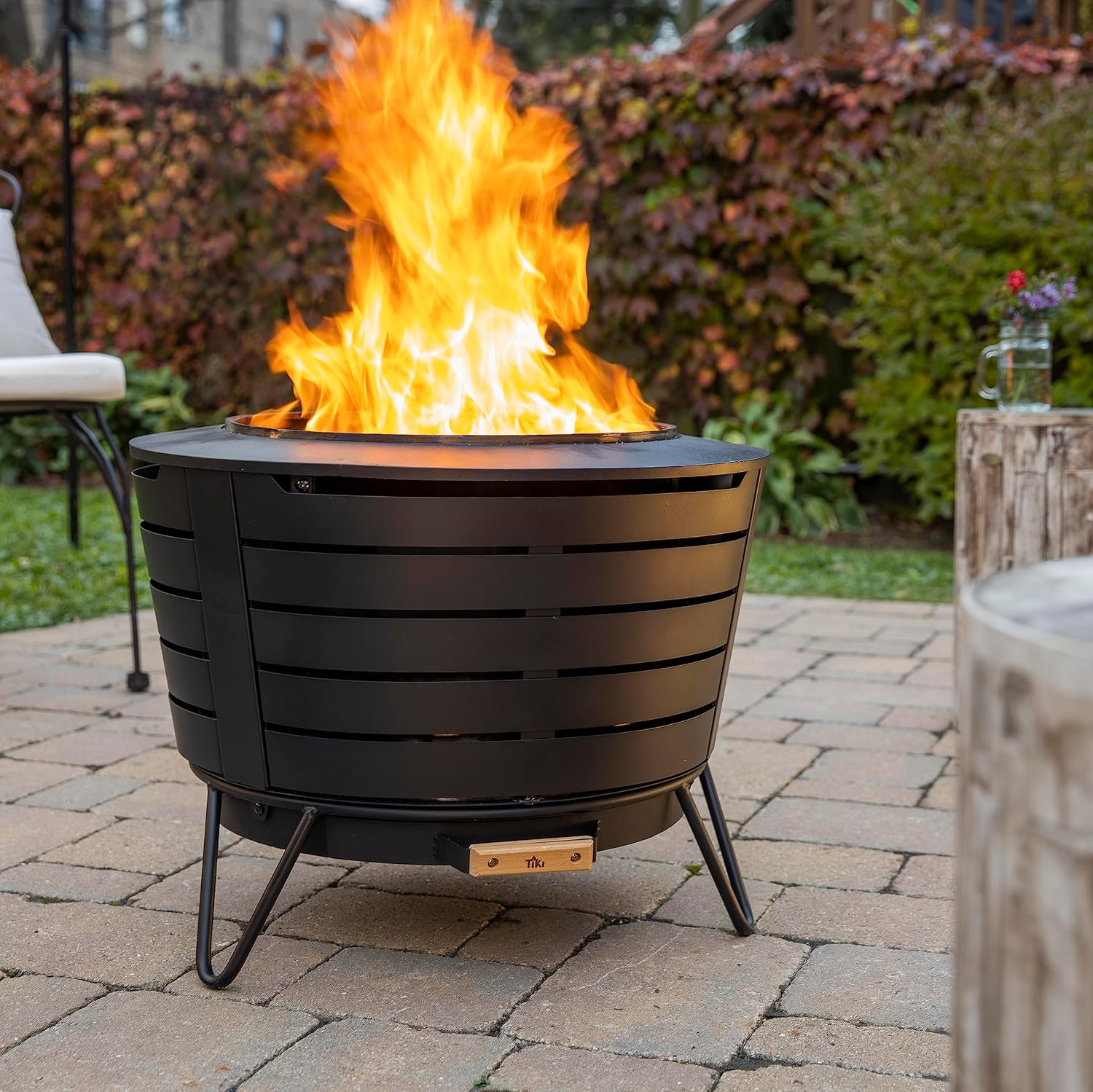
Tiki Brand Fire Pit (approximately $150–$200) uses a single-wall design with augmented airflow channels. It is legitimately less smoky than a traditional fire pit but does not achieve the same secondary combustion effect as the double-wall leaders. The This Old House Reviews Team notes in their “Best Smokeless Fire Pits” guide that the Tiki performs well for its price tier but produces more smoke than premium double-wall units, particularly when wood moisture content is higher than ideal. It is the right call for a client who wants a meaningful step up from a basic fire ring without the Solo Stove or Breeo investment.
The generic double-wall knockoff tier ($60–$120) — unbranded units available through big-box and online retail — presents real longevity risk. Published specs on these units rarely disclose steel gauge. Owner experiences shared in Hearth.com forum threads consistently describe warping, weld failures, and degraded smokeless performance within one to two seasons. For a client who wants to test the concept before committing, an entry-level Solo Stove Bonfire or Tiki is the safer floor, not an unbranded unit with no warranty and no disclosed materials specification.
Solo
In stock on Amazon
Check price on AmazonSide-by-Side Comparison at a Glance
| Model | Diameter | Material | Approx. Retail | Cooking Add-On |
|---|---|---|---|---|
| Solo Stove Bonfire 2.0 | 19.5 in | 304 Stainless | ~$350 | Grate (~$60) Solo — |
| BioLite FirePit+ | 17.3 in | Steel/Mesh | ~$250 | Grill grate (~$50) Solo — |
| Tiki Brand Fire Pit | 20 in | Steel | ~$150–$200 | None standard Solo — |
| Solo Stove Yukon 2.0 | 27 in | 304 Stainless | ~$550 | Grate (~$80) TIKI — $276.48 |
| Breeo X Series 19 | 19 in | Stainless/Corten | ~$350 | Outpost (~$200) TIKI — $276.48 |
| Breeo X Series 24 | 24 in | Stainless/Corten | ~$530 | Outpost (~$200) Cuisinart — $399.99 |
| Breeo Luxeve 24 | 24 in | Corten + Steel | ~$650 | Outpost (~$200) Cuisinart — $399.99 |
Total Cost of Ownership: What the Sticker Doesn’t Tell You
The retail price on any smokeless fire pit is not your real cost. Here’s where the gap consistently opens:
Stand or base: Most smokeless fire pits ship without a stand, or with a minimal ring that puts the unit close to the ground. A proper stand that elevates the pit to comfortable seated-use height runs $60–$120 from both Solo Stove and Breeo. On a composite deck or low-clearance wood surface, a stand is also a heat-protection necessity — manufacturer clearance specs should be confirmed against your specific surface material before installation.
Lid and weather cover: A cover extends the life of the unit significantly, especially for corten models still in the active patina phase. Both Breeo and Solo Stove sell fitted covers in the $30–$60 range per model.
Cooking system: If live-fire cooking is part of the project brief, Breeo’s Outpost grill system at approximately $200 is a one-time add-on that delivers serious utility. Solo Stove’s cooking grates are more modest in capability but adequate for casual use at roughly $60–$80.
Hardscape protection: On finished pavers, concrete, or bluestone, a spark-arresting mat or dedicated fire pit pad is worth the $40–$80 investment. For corten units specifically, a sealed or sacrificial surface layer underneath handles patina runoff during the weathering-in period. This is a detail that belongs in a client specification document, not a post-installation phone call.
Decision Rules: If X, Then Y
If your client is equipping a modern or contemporary patio with premium furniture and wants a low-maintenance, clean aesthetic: Solo Stove Yukon 2.0 is the call. Largest owner review base, strong accessory ecosystem, and the stainless finish photographs well. Brief them on heat discoloration so it’s not a surprise.
If your client wants the fire pit to anchor a natural-materials or rustic-industrial landscape design and the patio surface can be sealed: Breeo X Series 24 or Luxeve. The corten patina earns its premium over time and reads as a design decision rather than just a product choice. Make the hardscape conversation happen before installation.
If live-fire cooking is a real feature — not just a nice-to-have: Breeo with the Outpost system, without qualification. The Solo Stove cooking accessories do not match it for functional versatility.
If the client wants to test the category before committing serious money: Solo Stove Bonfire 2.0 at approximately $350 is the lowest-risk entry point — established warranty support, strong resale value, and the 2.0 ash pan redesign resolved the primary complaint from the first generation.
If the budget is under $250 and the patio is small (two to four people, covered or sheltered space): BioLite FirePit+ is worth the conversation. The fan-controlled airflow is genuinely useful in a covered patio where passive draft is inconsistent.
One thing no product spec sheet can tell you: whether your specific jurisdiction treats a portable smokeless fire pit differently from a traditional fire pit for covered-patio use, and what setbacks from structures apply. NFPA 1 and local fire codes vary enough that this question must go to the local authority having jurisdiction (AHJ) before the product ships — not after it’s installed.