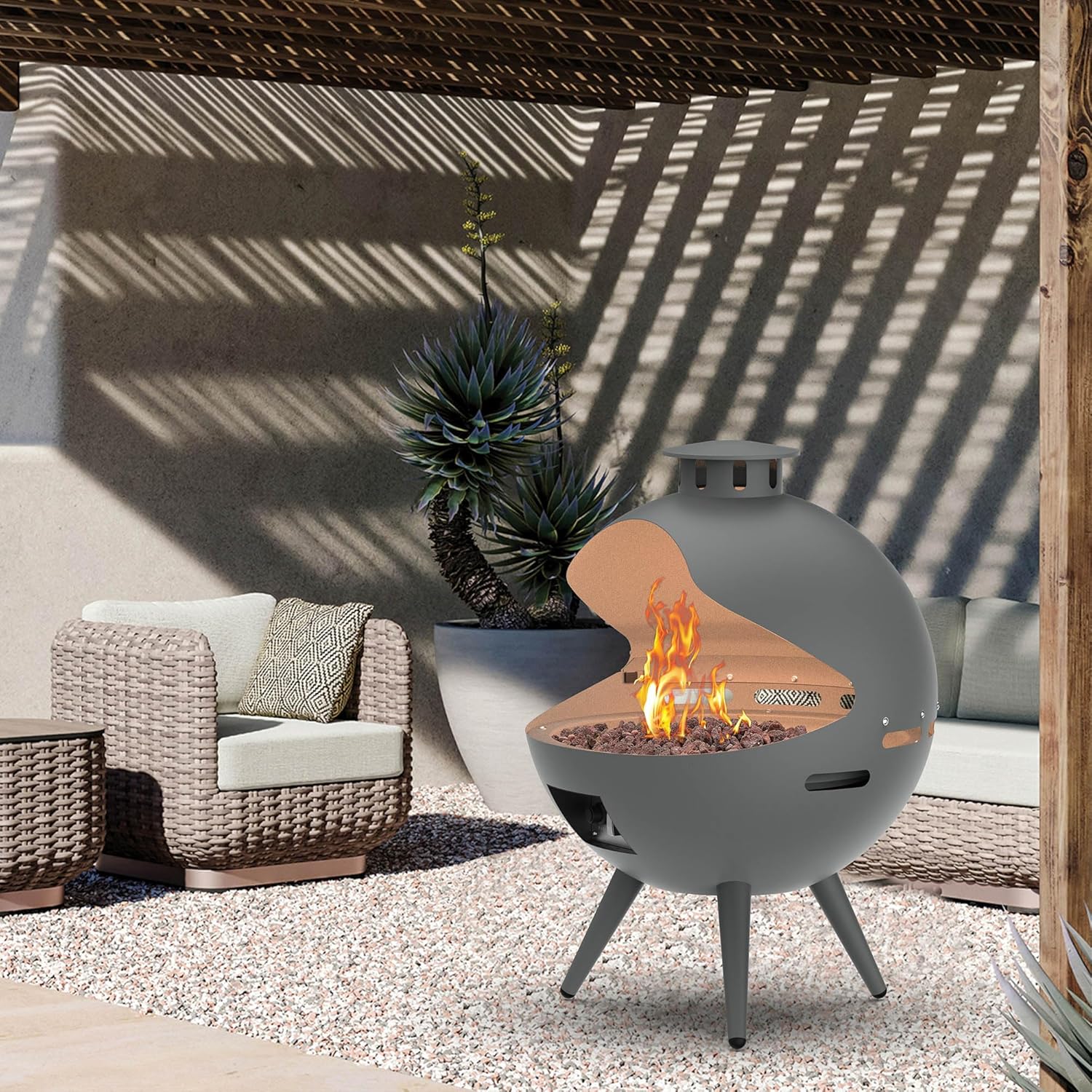
A chimenea (chim-eh-NAY-ah) is a freestanding outdoor fireplace — the kind with a bulbous belly and a narrow chimney neck that you’ve probably seen on a patio or in a garden center. Traditionally they burn wood, and a lot of people love them for exactly that reason: the crackle, the smell, the ritual. But today a significant share of the market runs on propane or natural gas instead. You twist a valve, press an igniter, and you have a real flame in about three seconds — no kindling, no smoke in your eyes, no bag of ash to haul on Monday morning. The trade-off is real, though: gas units cost more upfront, require a fuel connection or tank management, and deliver a flame that some buyers find noticeably “cleaner” in both the good and the somewhat sterile sense. This guide breaks down that tension honestly — fuel cost math, material choices, clearance rules, and the brand-level decisions that actually determine whether a gas chimenea earns its keep on your patio or ends up feeling like an expensive nightlight.
| EDITOR'S PICK[Duluth Forge Ventless Stainless](https://www.amazon.com/dp/B01MTFIP4R?tag=greenflower20-20)… | Mid-tier[Planika BINO Outdoor Gas Firepl](https://www.amazon.com/dp/B0D892VD9M?tag=greenflower20-20)… | Budget pick[Cuisinart Chimenea Propane Fire](https://www.amazon.com/dp/B09NQDJLY6?tag=greenflower20-20)… | |
|---|---|---|---|
| BTU Rating | 24,000 | — | 40,000 |
| Ignition | Manual | — | Push to Start |
| Media Included | Crystal Log Set | — | Lava Rocks |
| Cover Included | — | Yes | — |
| Vent-Free | Yes | — | — |
| Heat Shield | — | — | Yes |
| Price | $1,499.99 | $350.00 | |
| See on Amazon → | See on Amazon → | See on Amazon → |
The Core Trade-Off, Stated Plainly
If you’re a practitioner — a landscape designer, outdoor kitchen specifier, or a homeowner mid-negotiation on a patio package — the convenience-versus-authenticity debate collapses into three concrete questions:
- Who will actually operate this, and how often?
- What does the local jurisdiction require for gas appliance clearances in a covered or semi-covered outdoor space?
- What is the honest total installed cost, gas line included?
Everything else — the flame pattern, the designer finish, the BTU rating — is secondary to those three. Let’s take them in order.
Operation Frequency and Use-Case Fit
The Hearth, Patio & Barbecue Association (HPBA), in its Outdoor Hearth Products Consumer Research Report, consistently finds that households who cite “hassle” as their primary objection to wood-burning outdoor hearths cluster into two groups: young families with limited outdoor storage (no good place to stack and season wood) and urban or suburban owners with HOA rules or municipal burn ordinances. For both groups, a gas or propane chimenea isn’t a compromise — it’s the correct product. You get fire on demand, no smoke violations, and no liability around children reaching for kindling.
The authenticity camp is also real. Across aggregated owner feedback on hearth enthusiast communities, the recurring complaint about gas chimeneas isn’t flame quality — modern glass-fiber burner media and lava rock beds are genuinely convincing — it’s the absence of process. Wood-burners talk about “tending” a fire. Gas-burners don’t. If your clients are outdoor entertainers who see fire-building as part of the event, this gap matters and you should name it in the proposal conversation.
Fuel Cost and BTU Math: Running Numbers for 2026
By mid-2026, propane prices across most U.S. markets are running roughly $3.20–$3.90 per gallon based on U.S. Energy Information Administration seasonal averages. A standard 20-lb propane cylinder holds approximately 4.7 gallons.
Quick operating-cost reference:
| Scenario | Details | Approx. Cost |
|---|---|---|
| 20-lb tank at $3.50/gal | ~4.7 gal × $3.50 | ~$16.45 per fill |
| 40,000 BTU/hr burner at medium output (≈20,000 BTU) | Tank lasts ~9–10 hrs of run time | ~$1.65–$1.85/hr |
| Cord of seasoned hardwood (delivered) | ~$350–$500 depending on region | ~$0.40–$0.60/hr equivalent |
Wood wins on fuel cost by roughly 3:1, sometimes 4:1 in firewood-rich regions. Natural gas, if you’re running a hard-plumbed unit, closes that gap significantly — at current commercial therm rates, natural gas burns at roughly $0.80–$1.10/hr at similar output levels. Fine Homebuilding’s coverage of outdoor kitchen plumbing projects puts a straightforward exterior gas line run at $300–$800, making hard-plumbed natural gas the cost-competitive choice for high-frequency users who can justify that installation cost.
The practitioner decision frame here: if the client will use the unit more than 40–50 hours per season, push toward natural gas with a dedicated line. If it’s a “special occasion” installation — a resort property fire feature that runs a few nights a week — propane tank management is perfectly adequate and avoids permit complexity.
Material Choices: What Changes When You Go Gas
Wood-burning chimeneas tolerate imperfect airflow because the fire itself creates convective draft. Gas burners are more sensitive to the relationship between burner pan geometry and the chimenea body. This has direct implications for which materials and form factors work well.
Cast iron remains the premium choice for gas-configured chimeneas. It handles thermal cycling without cracking (unlike clay), and the mass helps stabilize heat distribution around the burner assembly. American Fyre Designs’ published product specifications for their cast-iron gas chimenea line show wall thicknesses of 3/16″ to 1/4″ — heavy enough to hold heat for ambient warmth even when you dial the flame down.
Powder-coated steel is the mid-market standard, used extensively by Elementi in their gas-compatible chimenea and fire bowl crossover pieces. Published spec sheets from Elementi show 1.5mm–2mm cold-rolled steel construction, which is lighter and less expensive to ship than cast iron but requires closer attention to protective storage in freeze-thaw climates — powder coat can fail at chips and allow rust to track beneath the finish.
Clay and terracotta do not mix well with gas. The thermal dynamics of a gas burner can create localized hot spots that clay bodies aren’t designed to handle. More importantly, proprietary gas fitting integration requires precision tolerancing that clay manufacturing can’t reliably deliver. This Old House, in its Outdoor Fireplace Buying Guide, notes that clay chimeneas are not recommended for gas conversion kits — the consensus across published installation guides is consistent on this point.
Corten steel is emerging as a design-forward option for gas fire features, particularly in modern landscape projects. Its weathered patina pairs well with the design language of premium outdoor kitchens. The trade-off: corten runoff during the initial patina development phase will stain concrete and light-colored pavers. If your client has white limestone or light travertine, either specify a drip barrier detail or steer toward a powder-coated alternative.
Clearances and Code: The Part That Determines Whether This Actually Gets Built
Gas outdoor appliances operate under a different regulatory framework than wood-burning ones, and many designers conflate the two.
NFPA 211, Standard for Chimneys, Fireplaces, Vents, and Solid Fuel-Burning Appliances (2024 edition), governs solid-fuel appliances — wood chimeneas, wood fireplaces, and masonry units. Gas appliances, including propane chimeneas and prefab gas fireplaces, fall under NFPA 54, the National Fuel Gas Code, and for listed appliances, under the manufacturer’s UL-listed installation instructions, which are enforceable as code in most jurisdictions.
The NFI (National Fireplace Institute) Gas Appliance Venting and Clearance Standards Reference is a useful practitioner resource for understanding how listing requirements translate to field conditions. Key clearance benchmarks that come up consistently in covered-patio and pergola installations:
- Combustible overhead clearance: Most listed gas chimeneas require a minimum of 8–10 feet to a combustible overhead structure such as pergola beams or a patio cover. Non-combustible overhead clearances (metal, concrete) are typically reduced to 5–6 feet. Always verify against the specific product’s UL listing document.
- Side clearances to combustibles: 18–36 inches depending on radiant output rating. High-BTU units (50,000+ BTU/hr) typically require the full 36 inches to combustible furniture, planters, and architectural elements.
- Natural gas line sizing: A 40,000 BTU burner at 40 feet of run from the meter typically requires 3/4″ CSST or black iron. Undersizing the line is a common error that causes low-flame complaints after installation — get the gas contractor to calculate the total connected load across all appliances on the run.
Local jurisdictions vary. Some municipalities require a permit for any new gas appliance, including a portable propane chimenea if it’s within a certain distance of a structure. Others exempt UL-listed portable units. Call the local building department before quoting gas line work into the proposal. This is one of those things only a local inspector can answer definitively.
Brand-Level Comparison: Budget, Mid-Tier, and Premium
Budget Tier: Powder-Coated Steel Gas Chimeneas
Powder-coated steel gas chimeneas in the $400–$800 range are the entry point for practitioners who need a gas solution without a cast-iron budget. Elementi’s gas-compatible chimenea and fire bowl pieces sit in this range and are widely stocked at outdoor living retailers, meaning faster project availability. Published Elementi spec sheets show 1.5mm–2mm cold-rolled steel construction and a 5-year structural warranty on gas pieces. These are appropriate for dry or temperate climates and clients who will cover or store the unit seasonally. In high-UV or coastal environments, powder coat weathering can become visible within 2–3 seasons without a protective cover.
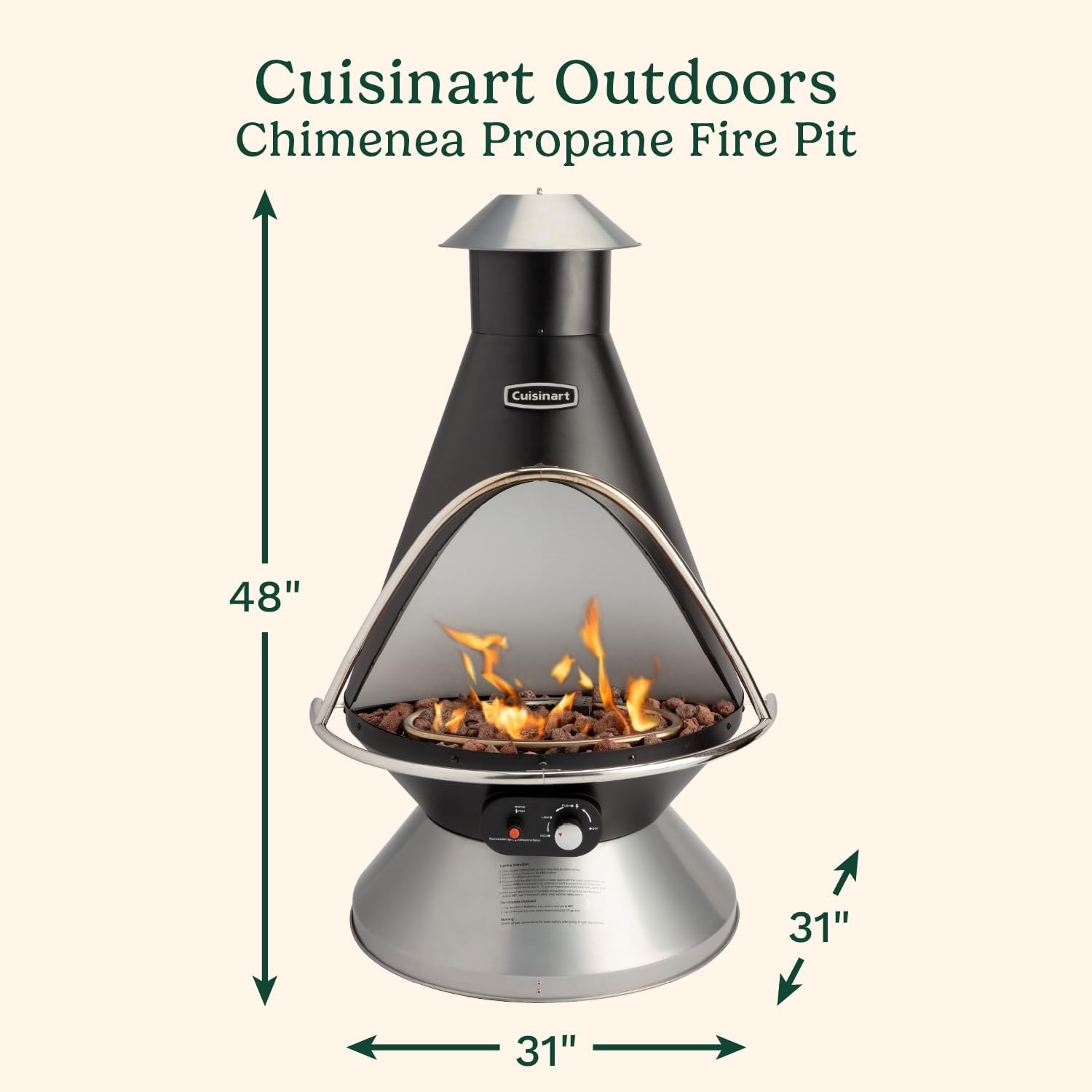
Cuisinart
In stock on Amazon
Check price on AmazonMid-Tier: Gas Fire Tables and Chimenea-Adjacent Designs
The $800–$1,400 mid-tier is dominated by gas fire tables and hybrid chimenea-fire bowl crossovers from brands like Elementi’s upper product lines and comparable mid-market offerings reviewed in This Old House’s Outdoor Fireplace Buying Guide. These units typically feature thicker steel (2mm–3mm), improved burner pan geometry, and better ignition hardware. They’re the right call for clients who want a designed outdoor living look without committing to a cast-iron price point. Natural gas configurations at this tier usually require a dedicated 3/4″ line — confirm with the gas contractor before the proposal is finalized.
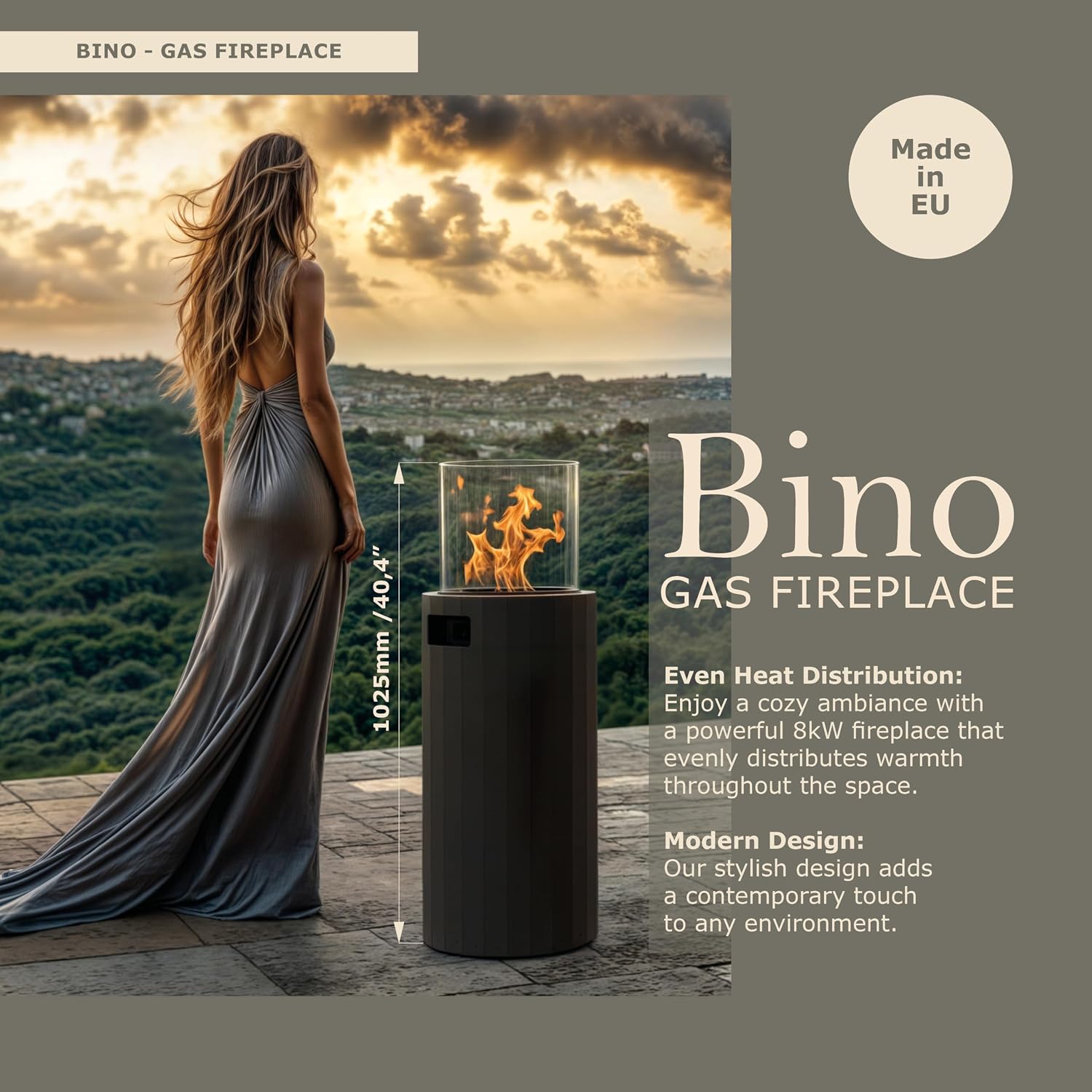
Planika
$350.00
In stock on Amazon
Check price on AmazonPremium Tier: Cast Iron Gas Chimeneas and Prefab Outdoor Fireplace Systems
$1,200–$2,200+ buys cast-iron construction from brands like American Fyre Designs, whose published product specifications show 3/16″ to 1/4″ wall thickness — heavy enough to hold radiant heat for ambient warmth even when the flame is dialed down. These are the right specification for coastal climates, high-frequency users, and clients who want a product that won’t show its age within a decade. American Fyre Designs published lead times run 4–8 weeks for special-order finishes, so they’re not the right call if the project timeline is under six weeks. For prefab gas fireplace systems exceeding $2,000 installed, the conversation shifts to outdoor fireplace insert manufacturers with proper B-vent or direct-vent configurations — a separate product category with its own flue liner and clearance logic.
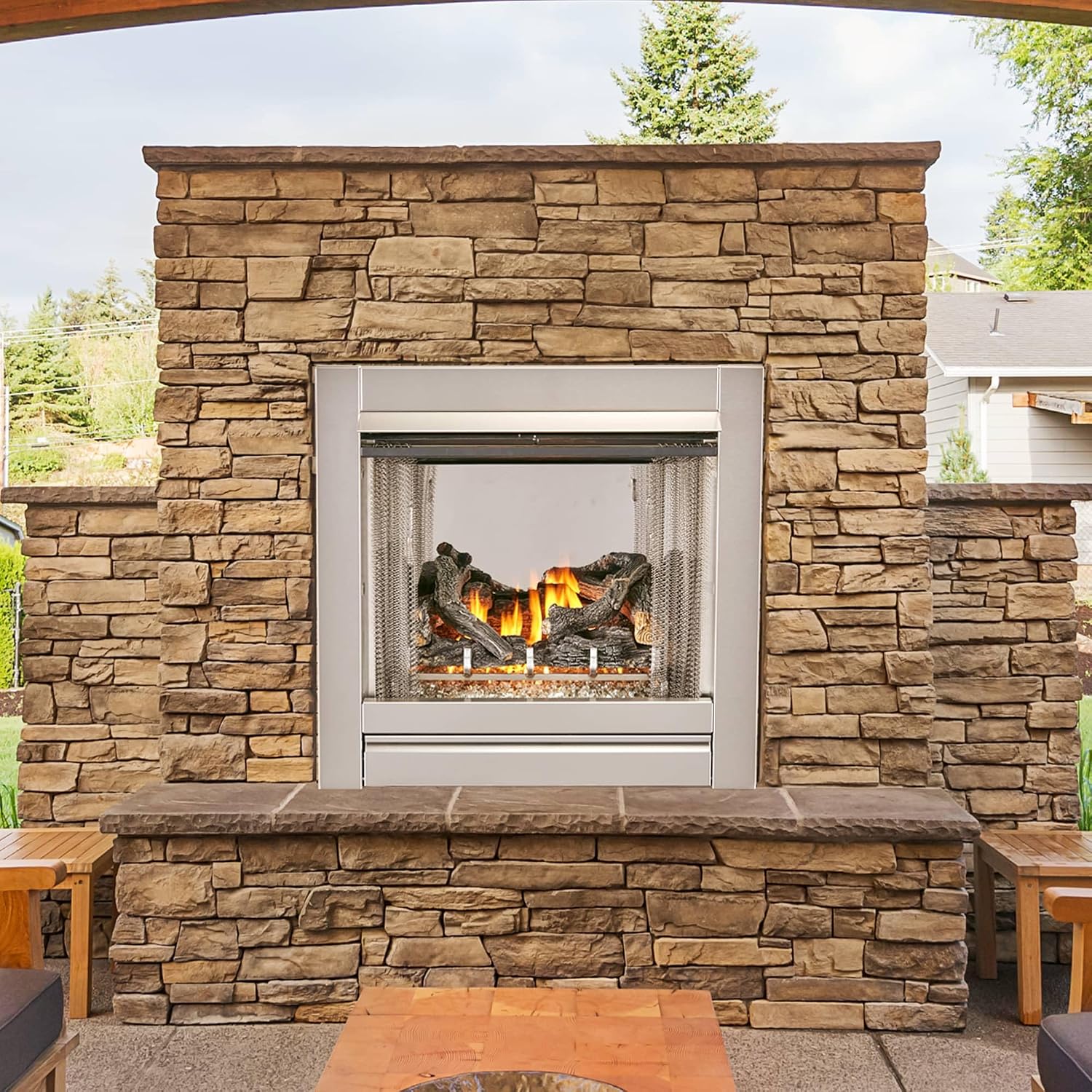
Duluth
$1,499.99
In stock on Amazon
Check price on AmazonThe Decision Rule
If your client or project fits the following profile, gas or propane is the right call and you should spec it confidently:
- Covered or semi-covered patio where smoke ventilation is constrained
- HOA, municipality, or wildfire-zone restrictions on wood burning
- Operator comfort with fire is low — they want a button, not a ritual
- Use frequency is high enough that propane tank management would be annoying (push to natural gas)
- Design aesthetic is contemporary or transitional — gas units’ cleaner flame pairs better with modern hardscape
If the project profile looks like this, lean toward wood:
- Open sky, rural or suburban setting with no burn ordinances
- Client is an outdoor entertainer who explicitly describes fire-building as part of the experience
- Budget is constrained — the 3–4× fuel cost advantage of wood compounds meaningfully over a decade
- A clay chimenea is on the shortlist for its aesthetic — gas is mechanically incompatible with clay construction
There’s no universal winner. Gas chimeneas solve real problems for real clients, and the flame quality argument against them has weakened considerably as burner technology has improved. The “fake fire” complaint is less common on current-generation glass-fiber media burners than it was five years ago, a shift noted across published installer reviews in hearth trade publications. The convenience-authenticity trade-off is real, but for the right client, convenience is the authentic choice for how they actually live outdoors.